10.2020 / User Experience
How Design Thinking & Design Sprints improve the innovation process for our clients

Design Thinking & Design Sprints
Often used merely as a buzzword, the term “design thinking” actually represents a comprehensive corporate philosophy. Design thinking makes it possible to create the right products or services for the right user group. Throughout every step, methodology, and specific action, the users always remain the primary focus.
How do we go about this? As one of several methods employed within the design thinking process, Allround Team conducts design sprints for clients across various industries – either on-site or entirely remotely. Originally developed by Jake Knapp at Google Ventures, this methodology pursues the ambitious goal of determining the potential success of a product at an early stage – without the need for lengthy and costly development processes.
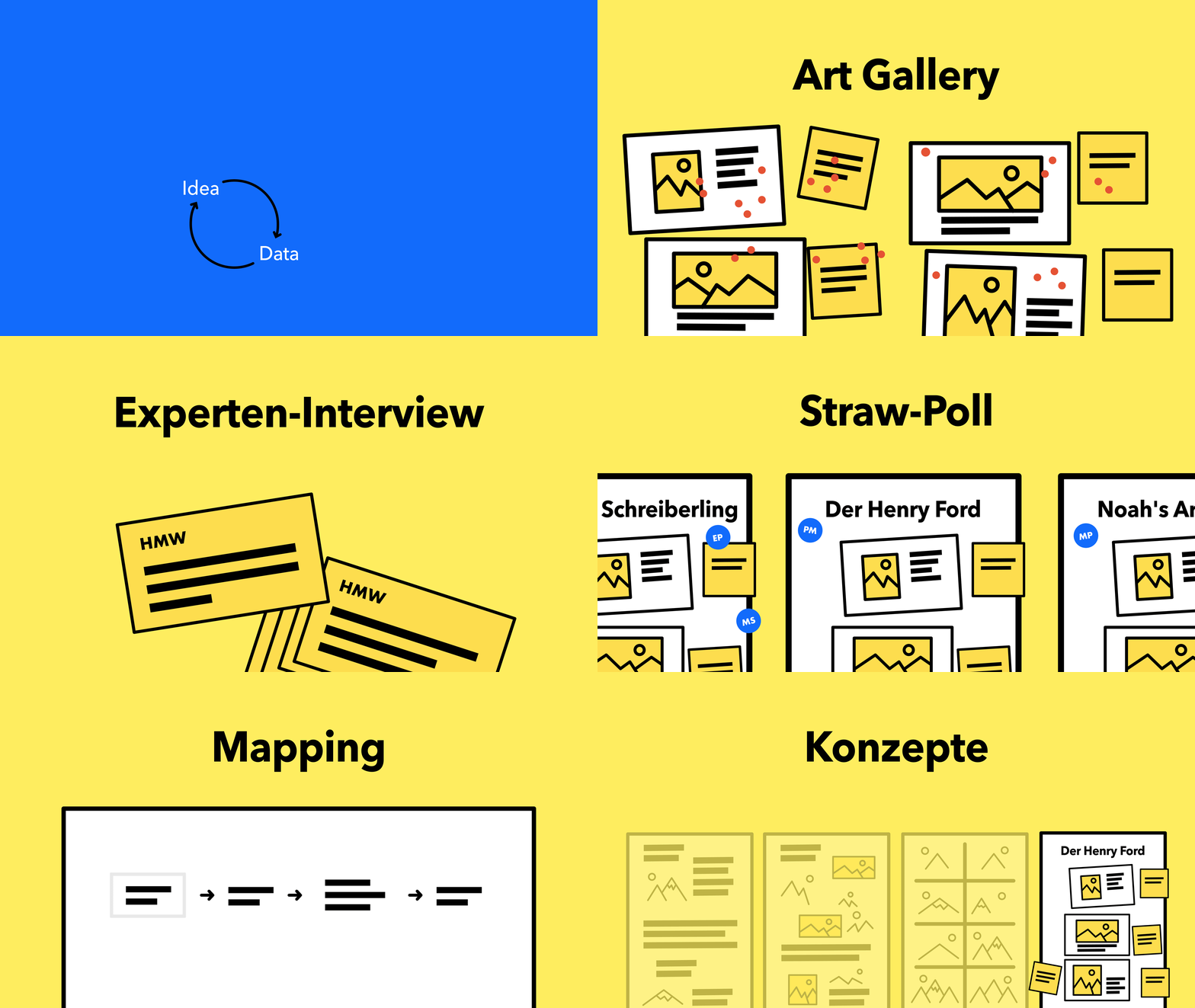
In developing this method, Knapp sought an efficient way to shorten product development cycles, rapidly generate user feedback, and thereby enable decision-makers to gauge the potential success of a product or service. This gave rise to a working concept that was initially applied within Google Ventures, but soon came to be successfully used in innovation processes by prominent companies around the world. In keeping with the design-doing mentality, the sprint process is constantly adapted and continuously refined.
The classic Design Sprint is a workshop format in which an interdisciplinary team – comprising members from various departments within a company – tackles a specific challenge over the course of five intensive days. The outcome of this process is not merely a concept for a potential product, but an initial, tested prototype that yields valuable user feedback.
In the Design Sprint process, prototypes are not intended to serve as an MVP (Minimum Viable Product) that showcases the full range of a product’s features; rather, they serve a guiding purpose: to provide users with an impression of the potential product within a short timeframe and to generate valuable insights. To this end, following a two-day workshop phase and a subsequent prototyping stage, the Design Sprint concludes with a day of user testing. This allows for the validation of the concept and the derivation of concrete next steps for product development.
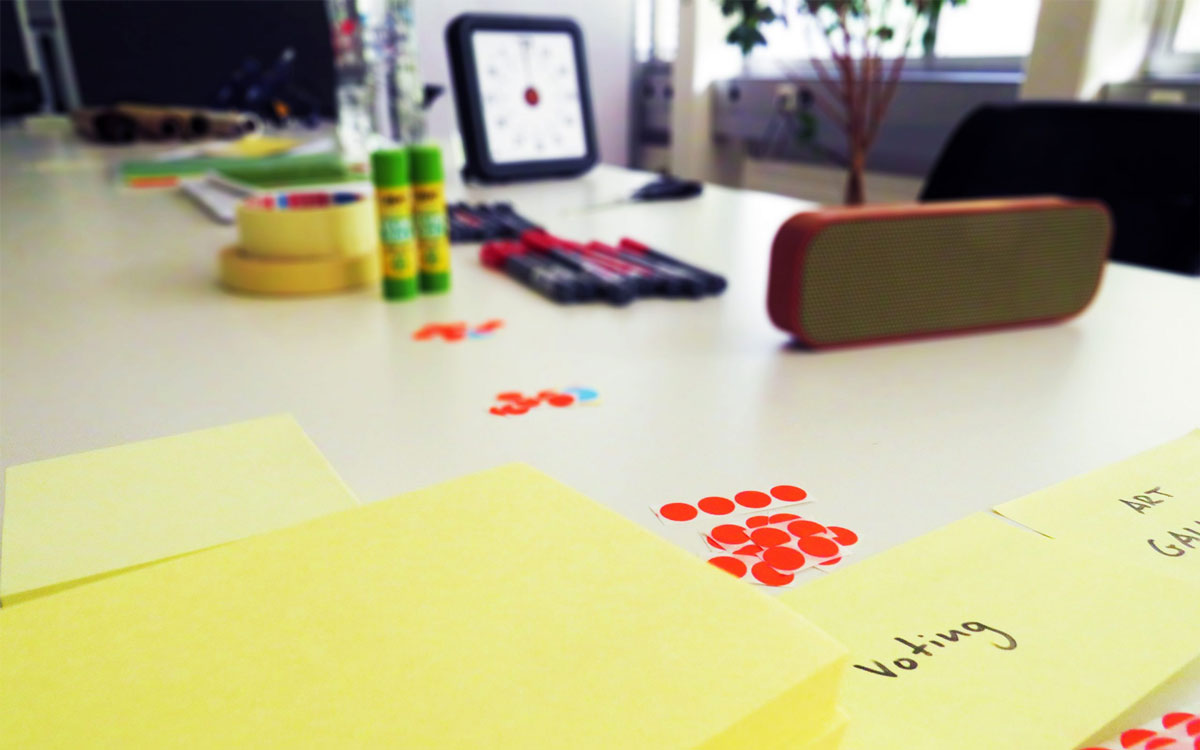
The Design Sprint relies on working principles specifically tailored to intensive innovation processes – sprints, in the truest sense of the word. The entire process is divided into short time slots; each step is allotted a limited amount of time, tracked by a timer that remains visible in the room (or in a digital space, as has been the case during the COVID-19 pandemic). To avoid the common pitfalls that often hinder innovation and progress, traditional meeting formats are bypassed whenever possible. Endless, circular discussions are replaced by the together-alone principle: everyone works on the same task simultaneously, yet independently. Everything produced is rendered as a physical representation within the space, ensuring that ideas do not simply hang in the air as mere words – open to various, potentially conflicting interpretations (following the principle: “tangible beats discussion”). Subsequent decision-making processes are simplified, structured, and visualized (using the “note-stick-vote” method).
As a process designed to move from problem definition to actual user feedback in a very short amount of time, the Design Sprint guides our clients in a structured, step-by-step manner toward the goal of successful product development.
You might also like the following posts
Dive deeper: These articles from the same category offer fresh perspectives, compelling insights, and further ideas designed to spark your curiosity and invite you to keep reading.


Get in touch!
Together, we will take your project a decisive step forward.